The prototype has moved a long way since the spring captures that used to sit on this site. This entry is a plain accounting of what landed over the last stretch, with unedited screenshots from the current build.
Fog of war that lives in the water
The old fog was an overlay plane floating above the ocean, and it always read as exactly that. The redesign moved the shroud into the water itself: ocean outside your sensor picture darkens and desaturates in the shader, with a temporal blend as coverage changes. Enemy hulls and aircraft gate strictly on the same visibility grid, so nothing pops or ghosts at the boundary.
Islands worth fighting over
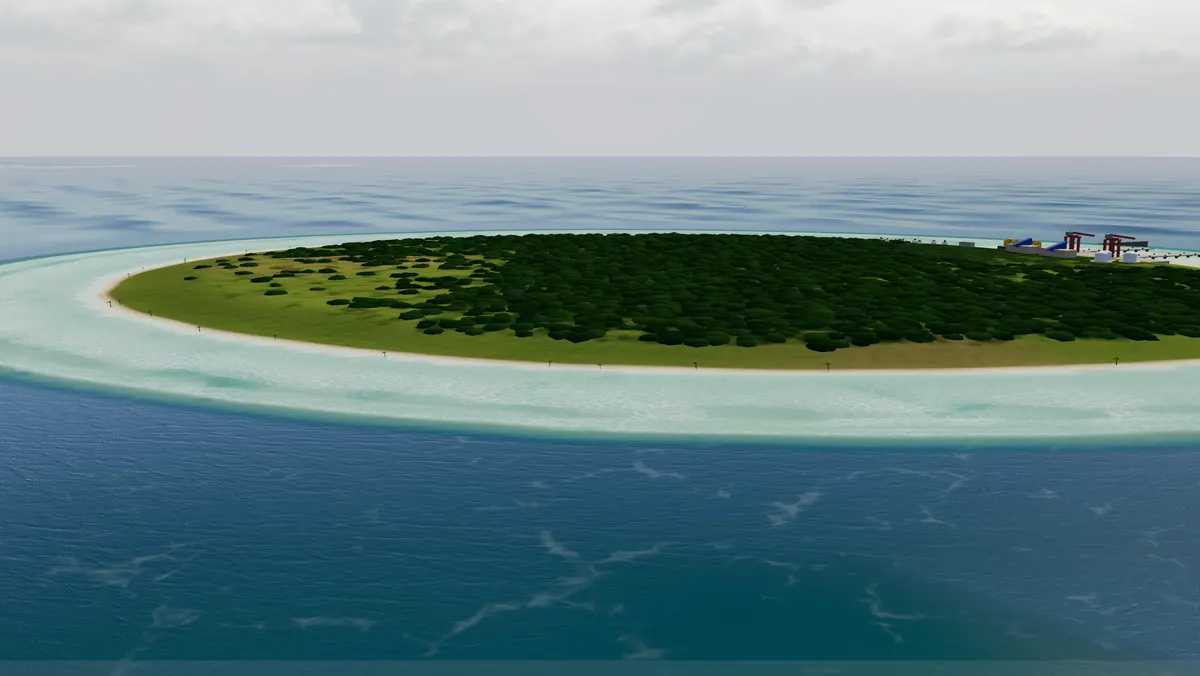
The archipelago got a full terrain pass: islands roughly doubled in footprint, reef bathymetry with proper shallow-water color, beach-line palms and baked canopy, and a structure kit for the ports, outposts and batteries that make terrain worth contesting.
A world you can hear
The audio layer went from silence to a full world pass: engine and rotor loops with distance falloff, missile motors that sound like the phase they are in, VLS launches, CIWS bursts, and ocean-state ambience beds under it all. The rule that shaped it: if something is moving on screen, it should not be silent.
Missiles that fail honestly
Guidance got a rework at the failure edges. Interceptors that lose lock now hold an inertial solution toward the last known point instead of instantly re-acquiring or dumbly flying on forever; missiles that overshoot expend themselves on fly-past instead of orbiting; and active-radar shots that go terminal without support run a real pitbull search basket. When a defense fails now, the combat log can tell you exactly which link broke.
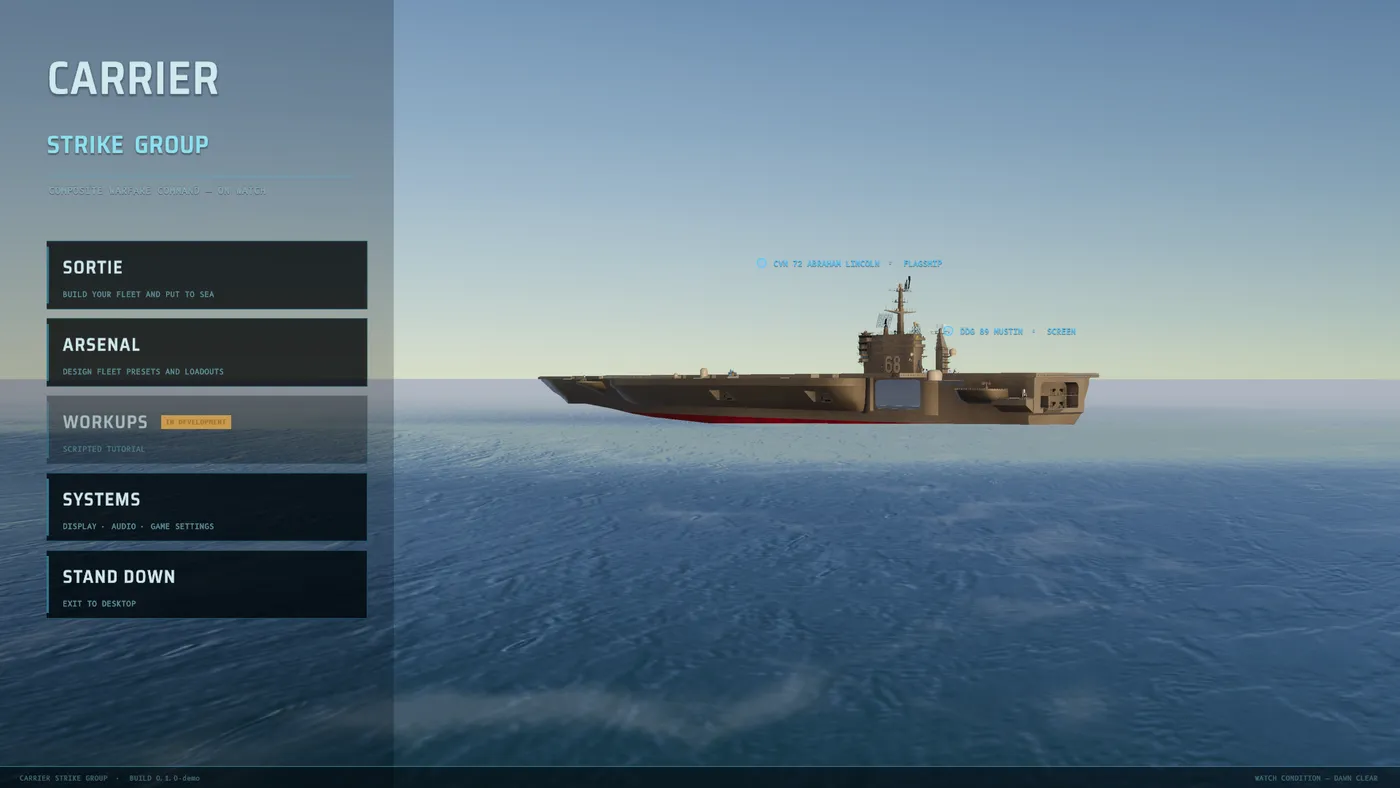
A front door
The fleet builder and the On Watch menu shipped earlier this month, which means the loop finally starts where it should: design a strike package under a points budget, set sail, and fight it. This site got rebuilt around the same idea — everything on the homepage is a capture from the running build, labeled as such.